The Gulf of America has entered a period of heightened tension as United States actions directed at Venezuela increasingly reverberate across the wider Caribbean basin. What was once treated primarily as a commercial and energy corridor is now an active zone where sanctions enforcement, counter narcotics operations, and military posture intersect. The cumulative effect has been to reshape the strategic environment for neighboring states whose economies and security are closely tied to maritime stability.
At the center of the friction is Washington’s intensified campaign to constrain Venezuela’s economic and logistical reach. Sanctions targeting the Venezuelan energy sector have been paired with assertive maritime enforcement, placing pressure not only on Caracas but also on regional shipping networks that operate in proximity to Venezuelan waters. These actions have introduced uncertainty into energy supply chains, insurance markets, and port operations throughout the northern Caribbean, particularly for states that rely on Venezuelan crude or transshipment activity to stabilize domestic fuel prices.
Security operations have further complicated the landscape. Expanded US naval patrols, aerial surveillance, and interdiction efforts aimed at drug trafficking have brought a sustained military presence into waters long characterized by limited enforcement capacity. While US officials frame these operations as necessary responses to transnational criminal networks that exploit weak governance and porous maritime boundaries, the scale and visibility of the activity have altered regional perceptions of risk. For smaller Caribbean nations, the proximity of enforcement actions to their territorial waters raises concerns about spillover effects, unintended escalation, and the potential disruption of lawful trade.
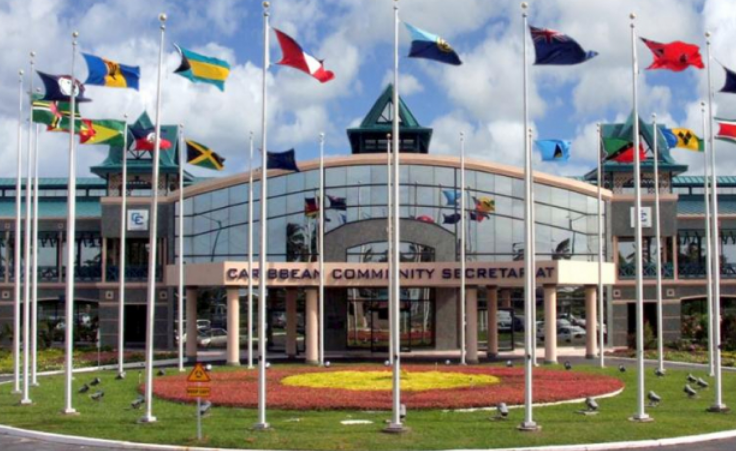
Venezuela has responded with sharp rhetoric and diplomatic pushback, portraying US actions as violations of sovereignty and international norms. This response resonates with some regional actors who remain wary of unilateral enforcement measures, even as they acknowledge the real challenges posed by narcotics trafficking and sanctions evasion. The resulting divide has exposed fault lines within the Caribbean itself, as governments balance economic necessity, security cooperation, and political alignment in an increasingly polarized environment.
Economic pressures have intensified these dynamics. Venezuela’s prolonged crisis continues to generate outward migration, including dangerous maritime crossings that strain the search and rescue capabilities of neighboring states. At the same time, reduced Venezuelan exports and enforcement actions against illicit shipping have narrowed energy options for several Caribbean economies already grappling with inflation and climate related shocks. Hurricanes and extreme weather events have further underscored the fragility of regional infrastructure, amplifying the consequences of any disruption to maritime logistics.
For the United States, the Gulf of America is being treated as an extension of its southern security perimeter, where trade protection, drug interdiction, and sanctions enforcement are viewed as mutually reinforcing objectives. Advocates of this approach argue that allowing criminal networks or sanctioned actors to operate freely in these waters undermines both US domestic security and the economic stability of the region. Critics counter that the absence of a clearly articulated multilateral framework risks alienating partners whose cooperation is essential for long term success.
The tension is therefore not solely bilateral but systemic. It reflects a broader transformation in how maritime regions are governed when economic flows, security threats, and geopolitical rivalry converge. The Gulf of America now sits at this intersection, serving simultaneously as a trade artery, an enforcement zone, and a stage for political signaling.
Whether these pressures lead to deeper instability or to a recalibrated regional order will depend largely on diplomacy. Sustained engagement with Caribbean governments, clearer rules of operation, and visible efforts to support lawful trade and disaster resilience could mitigate the risks of escalation. Absent such coordination, the Gulf risks becoming a space where enforcement outpaces consensus, and where strategic intent overshadows the economic and humanitarian realities faced by the states that depend on its waters.